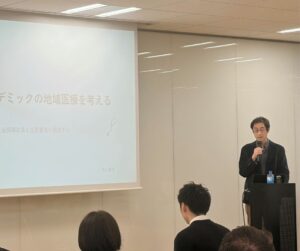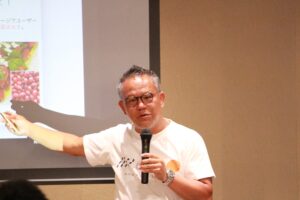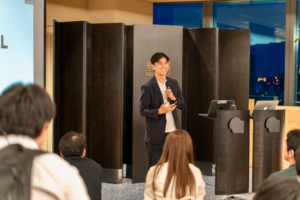
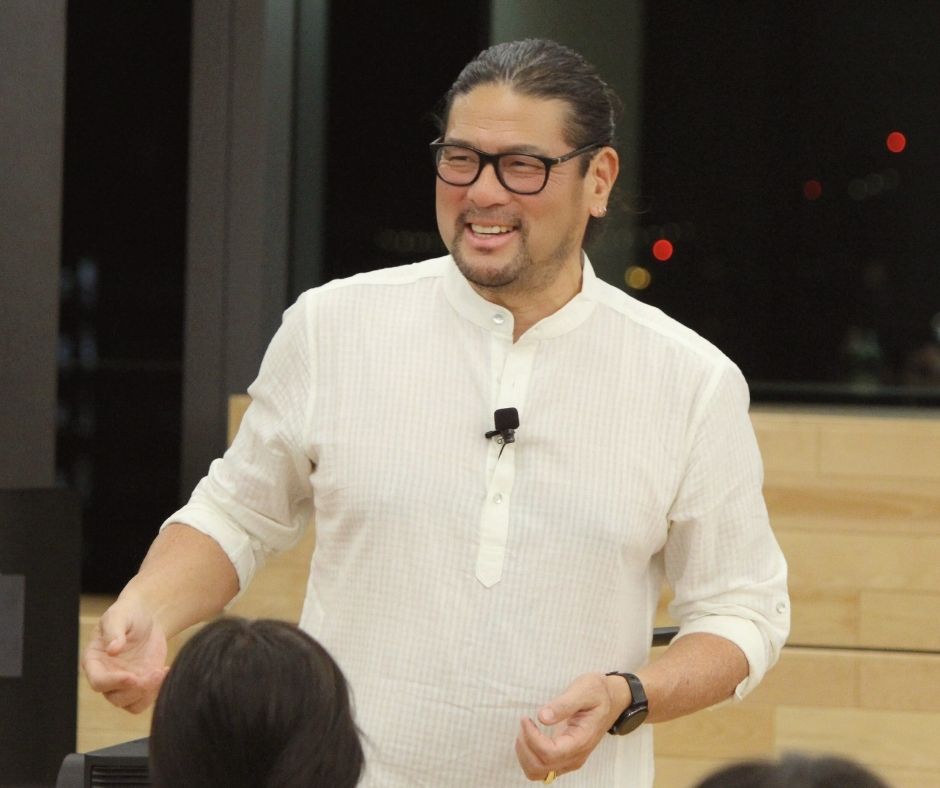
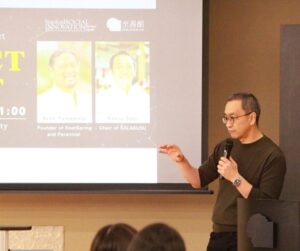
At Shizenkan, we hosted Impact Night, a gathering of practitioners committed to integrating social innovation and business. This session featured Britt Yamamoto, founder of iLEAP and author of The Soil of Leadership (Japanese edition: Hyakusho no Michi), for an inspiring evening exploring the essence of leadership and sustainability.
“Who are you?”
Britt Yamamoto opened the session with a simple yet profound question to the audience: “Who are you?”
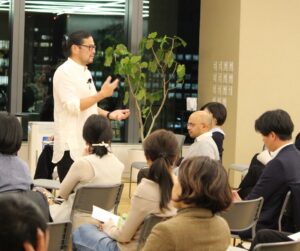
Participants were asked to take out a pen and paper and list 15 aspects of their identity—from “student” and “CEO” to “parent” or “tennis player.” Moving beyond job titles, they reflected on their multifaceted selves and then introduced themselves to one another based on what they had written.
The purpose of this exercise was to foster connection at a human level beyond professional roles, and to experience firsthand that recognizing who we truly are forms the foundation of authentic leadership. The atmosphere quickly became open, energized, and deeply engaged.
Cultivating the Soil: The Hyakusho Way
Drawing from his agricultural roots in Kumamoto, Britt introduced a powerful metaphor for leadership.
The concept of “Hyakusho” (百姓):
Literally meaning “a hundred surnames” or “a hundred roles,” Hyakusho refers to individuals possessing diverse skills and capacities—akin to Renaissance people, rich in capability and vitality. Britt redefined Hyakusho as a model for holistic leadership.
Conventional Farming vs. Sustainable Farming
- Conventional Farming: Focuses on growing plants. It relies on external inputs such as chemical fertilizers and prioritizes short-term results.
- Sustainable Farming: Focuses on cultivating the soil. When the soil is healthy, plants naturally thrive.
Britt suggested that modern leadership is overly fixated on “plants”—results, metrics, and performance—often leading to burnout among leaders and teams. True leadership, he argued, lies in enriching the “soil”: creating the conditions within organizations and communities that enable people to grow autonomously and sustainably.
Cultivating the Soil as Practice
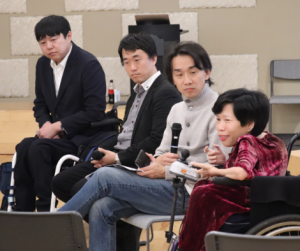
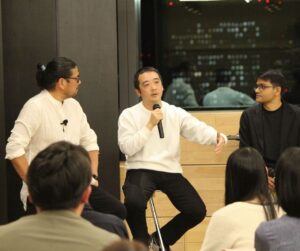
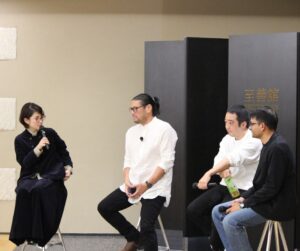
The evening continued with a dialogue featuring Kenta Aoki, Co-Founder and Co-CEO of NPO SALASUSU, and Suhaasu, a Shizenkan student.
Aoki shared his personal journey—founding an NPO at 19 and achieving success, only to find himself questioning his identity. After participating in Britt’s program in Seattle, he learned the importance of embracing vulnerability and allowing periods of “fallow”—intentional pauses for renewal.
Common ground with education:
In his current educational initiatives, Aoki emphasized that rather than “manipulating the plants” by simply imparting knowledge, the key is to create a safe and nurturing environment—the “soil”—where children can learn and grow together.
A new image of leadership:
One does not need to be a “strong leader” in the traditional sense. Acknowledging one’s vulnerabilities and showing up authentically can, in fact, bring forth leadership in others.
The session concluded with an introduction to Britt’s new book, The Soil of Leadership, reinforcing the message that leadership is not merely a skill set—it is a way of being.
Long after the formal program ended, participants continued engaging in thoughtful conversations around the question, “Who are you?” It was truly an evening in which the soil was cultivated and new seeds of connection were sown.
Related News