
Your leadership journey begins here
As generative AI develops rapidly, the nature of education is being fundamentally questioned. Shizenkan’s paradigm is “From Knowing to Doing and to Being.” This is a paradigm that ISL, our founding organization, has been practicing for 25 years, and it is also a trend among the world’s leading business schools.
With the rapid evolution of generative AI, Knowing (acquiring knowledge) – traditional focus in education – is rapidly losing its significance. Moreover, in an era of increasing uncertainty, prior analysis can hardly clearly forecast the future.
While robust skills remain important, what truly matters is Doing (taking action), and through Doing, clarifying the shape of the future with our own hands. The inevitable struggles with challenges that arise through this Doing are what help us grow as a person and as a professional. This conviction is precisely why Shizenkan focuses on leadership and positions its curriculum as the starting point of a leadership journey.
So what lies at the foundation of Doing? It is Being (being oneself)—the aspirations, values, and philosophy that leaders hold. Encountering, discovering, and confirming what one values, one’s life purpose, and what one wishes to realize guide the leadership journey.
Under this educational paradigm, supporting the “leadership journey” is the fundamental philosophy of Shizenkan’s MBA program. Below, we introduce the distinctive features of Shizenkan’s MBA.
1. Nurture and Support the Challengers with Frontier Spirits
When times change significantly, business, organizations, society, and humanity itself require leaders who challenge themselves to pursue “transformation and creation,” opening up new futures rather than resting comfortably with the status quo. However, no one is born a leader. One creates ripples of change in business, organizations, and society through their challenges, with the cooperation of colleagues and supporters. And it is as a result of such challenges that one grows into a leader.
Based on this belief, Shizenkan defines leadership as “driving oneself to take action to create an unseen future,” while committing to developing and supporting the pioneering challengers that the times demand. From this perspective, Shizenkan program is designed as the starting point of a “leadership journey” that continues beyond graduation.
Specifically, we provide opportunities to cultivate the ability to “pose questions” when confronting reality, to develop the power to envision an unseen future starting from oneself, to refine the professional skills necessary for engaging in transformation and creation, and to enhance leadership capabilities that earn empathy and trust from others. Furthermore, we provide opportunities to build human networks with role models, potential colleagues, and supporters for one’s challenges.
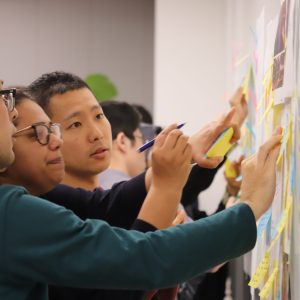
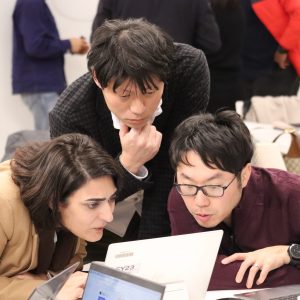
2. Develop Key Skills as Management Professionals
To practice leadership and challenge transformation and creation not only in business and organizations but also in society, skills as a management professional are essential. And the skills required are evolving day by day amid the exponential development of generative AI. The possession of knowledge and frameworks that have been within the scope of traditional MBAs, as well as the ability to analyze and process information in specific functional areas, are rapidly losing their value as human capabilities due to AI’s improved abilities. One of the roles that future professionals must fulfill is the ability to consider “what questions should we ask” based on the business and its environment. At Shizenkan, as an ongoing challenge, we continue to update our approach to skills education with “the ability to pose questions” as a key dimension.
Since our founding, Shizenkan has placed great focus on the ability to envision the future. We have incorporated “art thinking,” which starts from imagination born from one’s inner self, and “design thinking,” which envisions from the latent needs and wants of people and society, as core elements of our curriculum. Furthermore, we have emphasized “discontinuous thinking”—confronting disruptive trends such as scientific and technological innovation and creatively envisioning the future by leaping beyond present reality rather than extending from the past. The liberal arts education described later is also positioned as cultivating the ability to envision in that it evokes imagination for the future by identifying the drivers that move history and the world through deepening understanding of the essence of human existence and society.
However, even when we envision the future, such visions remain merely hypotheses. Management professionals are simultaneously required to validate the effectiveness of the visions they have drawn. And this domain is precisely what traditional MBAs excel at and have cultivated through MBA subjects such as finance, accounting, control, marketing, and strategy. At Shizenkan, we have robustly reorganized the insights of these traditional MBAs and woven them into our curriculum. Rather than just teaching fragmented knowledge and frameworks, the curriculum design philosophy is to cultivate the ability to use them to validate hypotheses with numbers and data, question their logical consistency, and refine their competitiveness, sustainability, and versatility through strategic thinking—in other words, cultivating “quantitative analytical methods and logical/strategic thinking.” In this context, Shizenkan’s basic approach is to promote the acquisition of skills as management professionals who can lead transformation and creation by uniquely combining business school educational methods with those of design schools and innovation schools.
This ability required of management professionals—to envision the future while simultaneously validating those visions—is rapidly changing in importance and necessity due to the advancement of generative AI. At Shizenkan, we continue to experiment with integrating such skills education with “the ability to pose questions” for the generative AI era.
3. Nurture Holistic Perspective through Business Policy
To envision and realize the future, we need businesses and projects that serve as vehicles, as well as organizational structures to support them. And above all, leaders are required to understand the entirety of the business, project, and organization.
Unfortunately, one of the challenges that traditional MBAs face is the fragmentation and siloization of education. Subjects that constitute the elements of management—accounting, finance, operations, marketing, and strategy—are often provided as patchwork knowledge and frameworks broken down into separate components, lacking linkage to the comprehensive view of management that encompasses them all. With this concern in mind, Shizenkan’s MBA has repositioned Business Policy, which provides a bird’s-eye view of the overall picture of business, organization, and management, as the core of education. We are undertaking the challenge of cultivating management professional skills—art thinking, design thinking, discontinuous thinking, quantitative analysis, logical thinking, and strategic thinking—while constantly linking them to management. In doing so, we consistently examine challenges to the future from the perspective of management executives who bear responsibility for business and organization, entrepreneurs who create new businesses and develop organizations, or social leaders who challenge social issues through their activities.
Accordingly, Shizenkan’s MBA clearly distinguishes itself from some business schools that aim to develop specialists in functional areas such as marketing or finance, and specializes in developing executive talent, entrepreneurs, and social leaders. As AI agents continue to develop, we anticipate that the utility of functional specialists will decline at an accelerating rate. However, Shizenkan is convinced that there will be continued demand for management executives, entrepreneurs, and social leaders who transcend and integrate multiple functions, pose questions from a bird’s-eye perspective, make judgments and take action based on those questions, and bear responsibility for those actions.
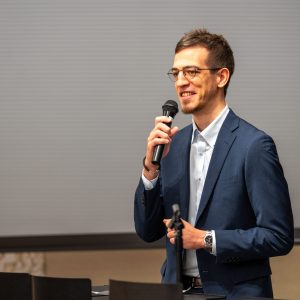
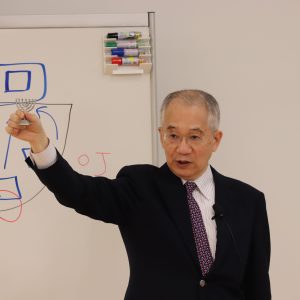
4. Distinctive Liberal Arts Education that Questions WHY
Skills as a management professional and the perspective of business policy are essential capabilities for accomplishing your endeavors. However, they are “means” for “how” to accomplish something, and do not question the “purpose” of “for what and for whom” and “why” to accomplish it. To take the first step toward an uncertain future, “means” alone are insufficient—it is essential to establish a “purpose” based on one’s own values. For this reason, ISL, Shizenkan’s founding organization, has believed for 25 years that education that promotes the acquisition of means alone without questioning purpose has a major flaw. At Shizenkan, to question this “purpose,” we provide liberal arts education in a distinctive form based on the insights ISL has cultivated. Specifically, starting with philosophy, we boldly incorporate history, religion, sociology, anthropology, biology, science, and the arts into our curriculum, re-examining views of history, the world, and humanity, and seeking to help establish the values that form the foundation for judgment, action, and choice required of leaders.
At the same time, liberal arts also serves as a foundation for understanding the current state of the world and gaining insight into the future as management professionals, at a time when society and the economy are undergoing major transformations. Traditional MBAs, which have emphasized analysis and validation, have failed to provide broad perspective and insights in this regard. At Shizenkan, we cultivate through liberal arts the deep insight to interpret the currents of the times that continue from past to present to future, and the transformation of the world, society, and human existence amid globalization and innovation. In this sense, liberal arts is also a new pillar of skills education for leaders who open up the future.
We are convinced that the importance of this liberal arts education will only increase in the age of AI. This is because it is the role that human leaders must fulfill to determine what kind of future to realize based on their own values after reading the currents of the times—in other words, the “purpose.”
5. Nurture the Ability to Mobilize People
The leader’s challenge is to move people and organizations and create value and impact in society. While leadership originates from oneself, one obviously cannot accomplish anything alone. Therefore, obtaining the cooperation and support of those around you holds the key to success or failure of the challenge.
Shizenkan’s curriculum focuses on this “ability to impact organizations and society by gaining the cooperation and support of those around you.” Organizations have hierarchies, where position and authority serve as sources of influence. However, mobilizing people merely through organizational titles does not truly create human collaboration. When people, of their own free will, empathize with a leader’s challenge and trust and cooperate with the leader, the collaboration between people can be elevated into power that creates impact in organizations and society. Particularly when confronting the unknown future of transformation and creation, how to gain people’s empathy and trust beyond titles becomes crucial.
In Shizenkan’s MBA, to cultivate such “ability to gain people’s empathy and trust without relying on titles,” we adopt various approaches centered on experiential workshops in groups, assessments, and coaching and feedback from peers. In particular, Shizenkan’s multinational classroom brings together individuals with vastly different origins, beliefs, religions, and values. To catalyze human collaboration in a multicultural environment, it is essential to understand oneself and acknowledge those who are different. While placing respect for humanity—”each person is equally human”—at the foundation, we design our curriculum with emphasis on cultivating the sensitivity, mindset, and attitude to understand “who I am and what I value, and who others are and what they value,” confirming one’s own identity while respecting and acknowledging others with different values.

6. Develop Whole-Person Leaders with Integrity
In the modern economic system, business and corporations have significant influence on people, society, and the planet. Therefore, Shizenkan believes it is essential for business leaders to be aware of their responsibility not only as leaders of businesses and corporations but also to society and the planet. And this is why Shizenkan emphasizes the importance of “whole-person” business leaders.
Whole-person nature means, so to speak, possessing multiple personas within oneself. What we aim for is a leader of business and corporations. That leader is also a leader of society and a leader who influences the future of the planet. It is the challenge and duty of whole-person leaders to simultaneously face the multiple stakeholders of business, corporations, society, and the planet, but bearing these multiple responsibilities simultaneously can sometimes mean embracing contradictions. This is because what is good for business may not necessarily be positive for the planet. In Shizenkan’s MBA, through liberal arts subjects starting with a unique course on the roles and responsibilities of corporations in society, we provide opportunities for each student to re-examine the relationship between business and corporations with communities, society, and the planet, and to confront contradictions.
In confronting such contradictions, what ultimately becomes important is integrity. Particularly as scientific and technological innovations—not only generative AI but also synthetic biology and genetic engineering—cast both great light and shadow on humanity, integrity is nothing less than the most important quality for a leader. However, integrity is not something that can be taught through education; it is something students must tell themselves and impose upon themselves while confronting their inner conflicts. Therefore, while education inevitably has its limits, Shizenkan’s MBA repeatedly poses questions about integrity throughout the program.
7. Advancing Education and Research Through Collaboration with Partners Across Five Continents
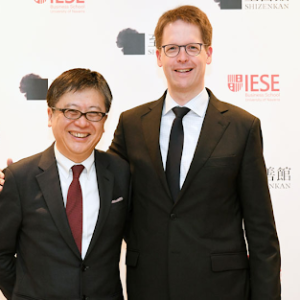
Shizenkan is a global graduate school of management born in Japan. With core partners including IESE Business School in Barcelona, Spain, SOIL (School of Inspired Leadership) based in Delhi, India, and FGV (Fundação Getulio Vargas) in Brazil, we maintain organizational partnerships in faculty exchange and deployment, joint implementation of educational workshops, and collaborative research on the future of global management and leadership education. Shizenkan also collaborates with overseas Chinese networks extending across Asia, including the Chinese Chamber of Commerce in Japan. Additionally, we operate an educational platform exploring the future of capitalism and the responsibilities and roles of corporations together with business schools around the world, including the United States, Canada, United Kingdom, France, Belgium, Netherlands, Denmark, Mexico, Nigeria, South Africa, Singapore, Indonesia, Malaysia, Thailand, Bangladesh, Hong Kong, and South Korea.
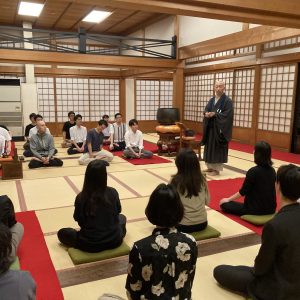
At the same time, while actively collaborating and engaging in dialogue with Western business schools, educational institutions, and organizations, Shizenkan pursues a distinctive approach as an educational institution originating from Japan and Asia. Asia has achieved remarkable economic development since the late 20th century and is now the center of the global economy, possesses unique traditional culture and spiritual foundations, including monism without subject-object separation, views of coexistence with others and nature, and the pursuit of human nature. At Shizenkan, while respecting Western traditions of subject-object dualism, individualism, and the pursuit of rationality, we bridge Western and Asian thought by incorporating comparative civilization studies, Eastern philosophy, and Zen/meditation into our curriculum, pursuing the forms of management and leadership required for the future. Simultaneously, we organize study trips to India, Japan (Kyoto), Hong Kong/Shenzhen, and other locations jointly with business schools across Asia, providing students with experiential opportunities beyond classroom learning, while conducting discussions on ensuring sustainability and realizing well-being from an Asian perspective.
Learn more about …