Driving the social implementation of a Circular Economy by fostering “Circular Leaders” through advanced education and cross-sector exchange.
The Graduate School of Leadership and Innovation Shizenkan (Shizenkan University), in collaboration with the Institute for Strategic Leadership (ISL), a non-profit organization, established the Circular Futures Design Center in April 2025.
As we face the limitations of a “linear economy”—characterized by the climate crisis, loss of biodiversity, and resource constraints—transitioning to a Circular Economy (CE) has become an essential challenge for the sustainable future of humanity. The Center aims to foster the leadership talent necessary to navigate this transition, creating cross-sector collaborations and acting as a catalyst for the transformation of socio-economic systems. From Japan, we will lead the global shift towards a circular economy.
Center Overview
- Official Name: Circular Futures Design Center
- Established: April 2025
- Director: Yu Kato (CEO, Harch Inc. / Specially Appointed Associate Professor, Shizenkan University)
Co-Director: Akira Sakano (Representative Director, Zero Waste Japan / Specially Appointed Associate Professor, Shizenkan University) - Advisory Board:
- Chair: Yumiko Noda (Chairman and Representative Director, Veolia Japan / Specially Appointed Professor, Shizenkan University)
- Rika Sueyoshi (founder and director general of the Ethical Association)
- Hiroya Tanaka (Professor, Faculty of Environment and Information Studies, Keio University / Director, Keio KGRI Ring-Design & Digital Manufacturing Design Center)
- Hideo Matsue (Managing Partner, Chief Executive Thought Leader
Representative of Deloitte Tohmatsu Institute / Specially Appointed Professor, Shizenkan University / Professor, Graduate School of Social Design Studies…and others.)
Purpose of Establishment
The global momentum toward a Circular Economy, which originated in Europe, is fundamentally reshaping the world. As humanity confronts a global climate crisis and reaches the limits of our Planetary Boundaries, the 20th-century linear model of “mass production, mass consumption, and mass disposal” requires a radical transformation. Companies, as the primary drivers of this change, are pressured to pivot their business models while leveraging digital technology and finance to create sustainable value.
The impact of a Circular Economy extends beyond business and economics. It holds the potential to transition society from a centralized system to a decentralized, autonomous model. Local cycles of agriculture, energy, and waste foster regional resilience and vitality. In this process, the strengthened connections between people, communities, and nature contribute significantly to the enhancement of human well-being.
The key to realizing a Circular Economy lies in human talent. We need individuals who are not satisfied with the status quo, but who can envision the future and embrace the challenge of creation and reform. We need leaders who can look beyond their own organizations to collaborate with startups, other companies, and even competitors to form ecosystems that drive industrial change. Furthermore, we need talent capable of bridging the gaps between the private sector, government, and civil society to create new cross-sector synergies.
To achieve this, we must foster the leaders who will embody this future, create spaces where they can connect across boundaries, and build an ecosystem that supports innovation and social implementation. With this vision, Shizenkan University, together with its founding organization ISL, has launched the Circular Futures Design Center. With the cooperation of various pioneering institutions in Europe, we will promote human resource development, support social implementation, and advance research and advocacy across Japan and Asia.
Core Activities
- Talent Development: Operating cross-sector education and leadership programs.
- Organizational Transformation: Supporting the evolution of existing businesses and organizations.
- Startup Acceleration: Providing support and acceleration for circular economy startups.
- Insight & Dissemination: Collecting, analyzing, and sharing cutting-edge global practices.
- Future Visioning: Exploring and advocating for a future where people, society, and the planet coexist in harmony.
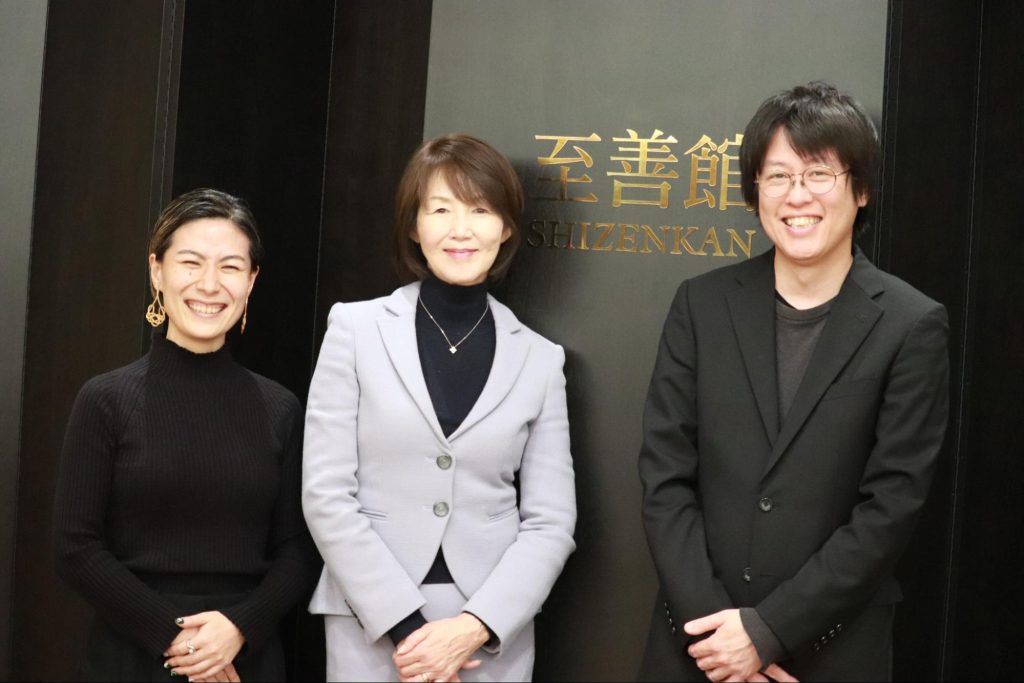
Introduction of the Center Director, Co-Directors, and Chair of the Advisory Board
<Director>
Yu Kato (CEO, Harch Inc.)
Founded Harch Inc. in December 2015. Launched and became Editor-in-Chief of “IDEAS FOR GOOD,” a global magazine featuring ideas to make society better. Since 2020, has developed the circular economy specialized media “Circular Economy Hub” and “Circular Yokohama” in Yokohama. In 2024, launched “Circular Startup Tokyo” in Tokyo. Engaged in promoting sustainability for corporations and municipalities, and supporting the transition to a circular economy. B Corp. Full member of the Impact Startup Association. Completed the “Sustainable Marketing, Media and Creative” program at the Cambridge Institute for Sustainability Leadership, University of Cambridge. Graduated from the Faculty of Education, University of Tokyo.
Key Roles in the Circular Economy
- Nikko Corporation, Outside Director (2025–)
- Director and Specially Appointed Associate Professor, Circular Futures Design Center, Shizenkan Graduate University (2025–)
- Participating company in JST・COI-NEXT Kanazawa University “Resource Circulation Society Co-creation Hub Using Plant-Derived Renewable Polysaccharide Plastics” (2023–)
- JST COI-NEXT Keio University “Co-creation Hub for a ‘Symbiotic Upcycling Society’ Connected by Respect” Keio University SFC Research Institute Member (2023–)
- Contributing Author, “Discard Design: Ideas for Creating a Sustainable Society” (Kazufumi Nagai + Tama Art University Discard Design Project) (2023)
- Advisor, Saitama Prefecture Circular Economy Promotion Subcommittee (2024–)
- Kanagawa Prefecture, Yokohama City: Yokohama SDGs Design Center, Sustainability and Circular Economy Lead (2024–)
- Advisor, Circular City Project, Gamagori City, Aichi Prefecture (2021–)
- Auditor, NPO WE21Japan (2024–)
<Co-Director>
Akira Sakano (Representative Director of Zero Waste Japan / Director and Co-Representative of Green Innovation / CSO of ECOMMIT Co., Ltd.)
A bird enthusiast. Developed an interest in environmental issues triggered by the world’s largest endangered parrot, the Kakapo. After majoring in environmental policy at university, she participated in the waste policy initiatives of Japan’s first “Zero Waste Town”:Kamikatsu, Tokushima Prefecture, through the NPO Zero Waste Academy, which manages waste reduction efforts. As Chairperson, she promoted regional waste reduction initiatives and contributed to the dissemination of zero waste practices domestically and internationally.
In 2019, she served as Co-Chair at the World Economic Forum Annual Meeting (Davos Conference) alongside CEOs of Microsoft and others. Since 2020, she has been working on creating models for a circular society through Zero Waste Japan. In 2021, she co-established the Green Innovator Academy, a training program to foster young innovators aimed at societal transformation toward decarbonization. Starting January 2023, she assumed the role of Chief Sustainability Officer of ECOMMIT, a resource circulation infrastructure company.
She holds a Master’s degree in Global Environmental Studies from Kyoto University Graduate School. Awarded Nikkei Woman of the Year 2022. Young Global Leaders Class of 2025 by the World Economic Forum
<Chair of the Advisory Board>
Yumiko Noda (Chairman and Director, Veolia Japan Co., Ltd.; Adjunct Professor, Shizenkan University)
After graduating from the University of Tokyo and Harvard Business School, she served as Deputy Manager at the Head Office, New York Branch, and London Branch of The Long-Term Credit Bank of Japan (now SBI Shinsei Bank). She then became Director at PwC UK. Returning to Japan in 2000, she was appointed Partner and contributed to the creation and promotion of Japan’s PFI market.
Subsequently, she served as Vice Mayor of Yokohama City, Senior Fellow at Tsinghua University Japan Research Center (Beijing), and Partner at PwC Advisory Co., Ltd., before becoming President and CEO of Veolia Japan Co., Ltd. in 2017. She has served in her current position as Chairman and Director since 2025.
Public Positions
- Keidanren (Japan Business Federation): Vice Chair, Chairman of the Environment and Safety Committee
- Keizaidoyukai (Japan Association of Corporate Executives): Trustee; Chair of the Regional Co-creation Committee
- Member of the Governing Board and Chair of the Working Group, “Circular Partners” (METI/MOE)
- Expert Member, Cabinet Secretariat “Council for Creating New Regional Economies and Living Environments”
- Director, Japan International Exposition 2025 Association
- Member, University of Tokyo Management Policy Council
- Member, Water Advisory Group, Asian Development Bank
- Outside Director, East Japan Railway Company, Mizuho Financial Group, Inc., and Sumitomo Chemical Co., Ltd.
Publications
- PFI Knowledge (2003, Nikkei Publishing Inc.)
- Strategies and Methods for Privatization: From PFI to PPP (2004, Nikkei Publishing)
- Urban Export: The Future Opened by Urban Solutions (2015, Toyo Keizai Inc.)
- Circular Economy (2025, Nikkei BP, Nikkei Publishing)
- The Material Circulation Revolution (2025, Shokokusha, Supervising Translator)